What If Paul Harris Started Rotary Today, in 2026

As we celebrate another Rotary anniversary, I often wonder what Paul Harris would make of Rotary today.

Would he smile proudly?

Or stare in mild confusion while asking someone to explain what a “hashtag” is?

When he gathered a few friends together on 23 February 1905, I doubt he imagined that little idea would grow into a global movement.

But it got me thinking…

What if Paul Harris didn’t start Rotary in 1905?

What if he started it today, in 2026?

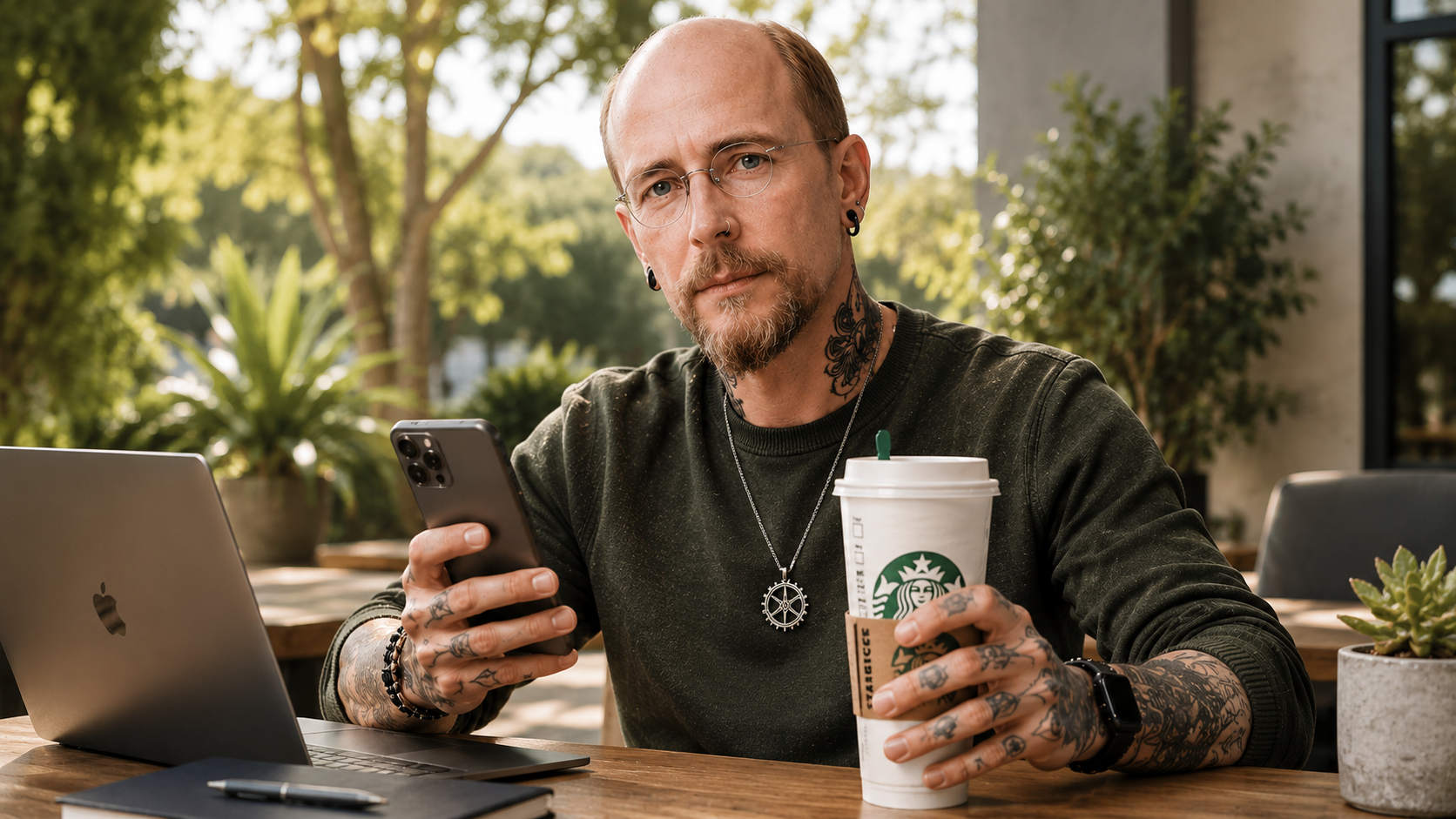
To imagine that, we first have to imagine a 30 something Gen-Y / Gen-Z Paul.

He’s probably a social entrepreneur with a podcast, a Substack newsletter, and a side hustle that somehow involves crypto investing. His style is equal parts metro, a dash of emo, and just enough hipster to know which café has the best ethically sourced oat-milk iced lavender-infused macadamia matcha latte with exactly two pumps of sugar-free vanilla, half-caf, and extra ice in a venti cup….

He eats organic, tries to remember to meditate, and owns at least one reusable water bottle that cost far too much.

He’s warm, engaging, laughs easily, and networking comes naturally, no need for the book “How to Win Friends and Influence People”. He’s already got 500+ LinkedIn connections and a group chat on WhatsApp that never stops buzzing.

So what would his Rotary club look like?

The Club…in the clurbbb..we all fam!

First up, it would be radically inclusive.

Members come from every background, belief, culture and identity imaginable. The club is thoughtful about traditions and careful to create an environment where everyone feels comfortable walking through the door.

They don’t argue politics, but they absolutely mobilise around problems.

Climate. Homelessness. Youth mental health. Community resilience. If it needs fixing, they’re in.

Their phones are their toolbox.

Instagram stories show service projects in real time.

WhatsApp groups organise volunteers.

LinkedIn spreads professional connections.

Crowdfunding platforms like GoFundMe and Kickstarter help launch projects in days instead of months.

Someone probably even built an app for the club.

Because of course they did.

Meetings (…sort of)

The club meets regularly, but not rigidly.

Sometimes in person.

Sometimes online.

Sometimes hybrid because someone’s travelling.

Maybe once or twice a month.

What matters isn’t attendance.

It’s impact.

Members join because they want to do something real, get their hands dirty, contribute their skills, and make a difference.

Communication never really stops. Ideas bounce around daily in group chats and social feeds. Service opportunities spread quickly through friends, colleagues and networks.

Suddenly people who’ve never heard of Rotary are turning up to help.

The Venues

Forget the formal meeting room.

This Rotary club might meet:

• at a small bar

• a co-working space

• a café

• a brewery

• or occasionally on Zoom while someone walks their dog

Costs stay low so energy and resources go into projects, not overhead.

The vibe is relaxed.

Laptops open. Ideas flowing. Someone designing a logo on Canva while another member is lining up volunteers.

Social Life

One thing would feel very familiar to Paul Harris.

Friendship.

The club would still prioritise time together, dinners, trivia nights, spontaneous catch-ups, community events.

Friends bring friends.

No pressure. No hard sell.

Just good people doing good things.

And interestingly, many people involved in their projects wouldn’t actually be members… yet.

They simply care about the same causes.

Sound familiar?

Maybe Paul Would Recognise It

The funny thing is, while this picture is imaginary, parts of it already exist in Rotary today.

Different formats.

Different styles.

Different generations.

But the same spirit.

People connecting.

People helping.

People building community.

Maybe if Paul Harris walked into a Rotary meeting in 2026 he might be surprised by the technology, the language, or the venues.

But I suspect he’d recognise the most important thing immediately.

A group of people who simply decided to do some good together.

And really, that was the whole idea in the first place.

Article by Evan Burrell

Hi, my name is, what? My name is, who? My name is...

There are a few things you can almost guarantee to be at a Rotary meeting.

A reciting of the Four-Way Test, someone selling a raffle ticket, a serving of Rotary chicken (maybe) and a room full of fully grown adults proudly wearing name badges like we’re at the world’s longest-running speed dating event.

And I absolutely love it!…..well not the chicken so much.

Rotary’s obsession with name badges actually makes sense, the tradition actually goes right back to Rotary’s earliest days, creating that relaxed, atmosphere where the mechanic, the magistrate and the milkman were all just “John,” “Sue,” or “Bill.” First names. No titles. Just fellowship.

The badge was there to make introductions easy and to remind us that in Rotary, we meet as equals. The badge became a symbol of that culture, worn proudly on the right side so it’s perfectly positioned for a handshake and a warm “G’day, I’m Evan.”

Which brings me to my confession…

I don’t just have a Rotary name badge.

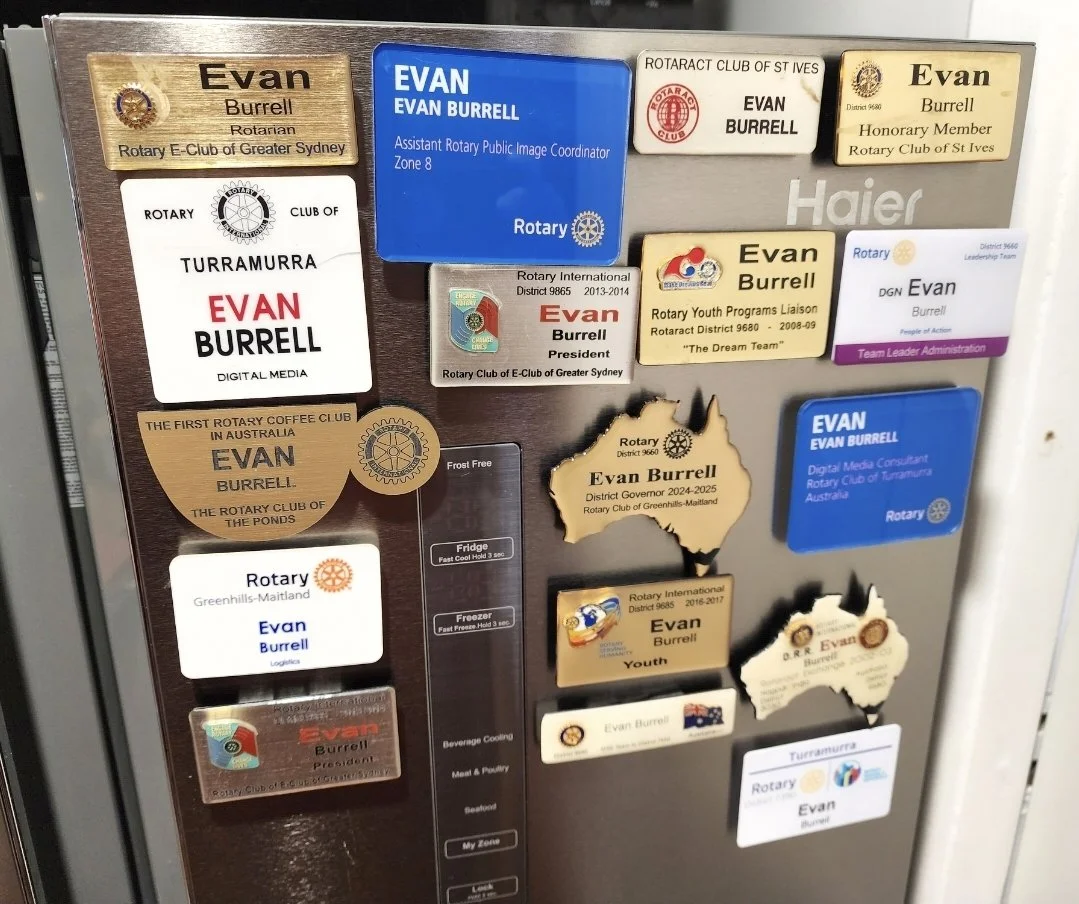
I have a Rotary name badge collection!

I’m sitting at about 30 of them.

Every possible variation:

Evan Burrell – Club President

Evan Burrell – Honorary Member

Evan Burrell – District Public Image

Evan Burrell – RI Communications Committee

Evan Burrell – Rotaract (yes, I’ve still got that one!)

Evan Burrell – District Governor

And in July i’ll get a new one!

Evan Burrell – Past District Governor….I’m waiting in a favour of anticipation for this one.

And at this point I need to head to IKEA and get a display cabinet, or have a rotating lanyard system like a backstage pass holder at a music festival.

But here’s the real upside…

If I ever get amnesia, I won’t panic.

I’ll just open my top drawer, look down and instantly know: “Ah yes… I’m Evan Burrell. Apparently I’ve held several positions of mild responsibility and I have lot’s of badges.”

Honestly, it’s foolproof identity insurance.

Every time I think, “This will be the last badge I’ll ever need,” Rotary says, “Congratulations! Here’s another role!” And off I go with another badge on the chest.

But the humour aside, the badge isn’t about hierarchy, it’s about connection. It says, “Here’s my name. Come and talk to me.” It reinforces that culture of first-name friendshipthat makes Rotary feel less like a formal organisation and more like a very well-organised family.

Yes, we may look like we’re permanently attending a conference icebreaker…

But when you walk into a Rotary meeting and everyone greets you by name, badge gleaming in handshake position, it feels less like a meeting and more like an episode of the 80s tv sitcom, Cheers.

Where everybody knows your name.

And they’re always glad you came.

And surely wouldn’t you want to go where everybody knows your name?

Evan Burrell

Six Months In: The Parts I Expected and the Ones I Didn’t

Six months ago, I slipped on the District Governor chain of office, stuck on the badge, smiled for the photos, did the customary big speech and thought I had a pretty good idea of what I was in for.

Turns out…….I had some idea.

Just not all of it…

This role has been everything people said it would be, inspiring, humbling, energising and busy!! But also there was a few things they didn’t quite warn me about.

At the six-month mark, it feels like the right moment to pause, take a breath, and reflect honestly on what this journey has been so far.

Here is the Good Stuff (and there’s been plenty)

First, the absolute privilege of it all. Visiting clubs across our district, meeting all the different people, hearing local stories, seeing creativity, generosity, and optimism in action, that has been the fuel in my tank.

There have been a few moments where I’ve sat quietly (hard for me!) at the back of a room thinking, “Wow… this is Rotary at its best.”

Projects that change lives. Members stepping up when it would be easier to step back. New ideas taking shape. Long-standing traditions evolving rather than fading.

I’ve seen leadership emerge in unexpected places. I’ve seen clubs reconnect with their “why”. I’ve seen people fall back in love with Rotary and that never gets old.

There have been laughs too. Plenty of them.....usually at my expense!. Because as I’ve always said if you can’t laugh in Rotary, you’re probably taking yourself far too seriously.

The Hard Bits (let’s not pretend they don’t exist)

Here’s the brutally honest part.

Some aspects of this role I have not enjoyed, in fact I have absolutely hated and some situations I was never truly prepared to face.

Leadership at this level doesn’t just come with the applause and handshakes. It also comes with difficult conversations, competing expectations, jealousy, plenty of criticism and moments where there is no perfect answer, only the least bad one.

There have been issues that have required me to be firm instead of friendly. Clarity instead of comfort and that’s been tough because my instinct is always to try and bring people together, not sit in the space where things are fractured.

It’s also been really confronting to learn that no matter how transparent, fair, by the book or values-driven you try to be, not every decision will be welcomed, but that’s just everything in life right?.

That’s a lesson I’m still learning and probably will keep learning forever.

The Balancing Act (or circus act)

Then there’s been the juggle. All the balls in the air, trying to catch them all.

Family. Work. Rotary.

Trying to be present everywhere, all at once, turns out to be impossible despite my best superhero intentions. There have been early mornings, late nights, long drives, and the occasional moment of wondering whether I left my brain on the top shelf at home.

Balancing this role with family life has been the biggest challenge of all. The guilt of missing moments with my children. The gratitude for an understanding partner. The constant recalibration of priorities. The questioning of whether it’s been worth it all.

It’s not always graceful. Sometimes it’s messy, sometimes the arguments have cut deep, but it’s real and it’s part of the story.

Why It’s Still Worth It

Despite the challenges or maybe because of them I’m deeply grateful for this experience.

This role has stretched me. Tested me. Forced me to grow in ways I didn’t anticipate. And it has reminded me why Rotary matters: not because it’s easy, but because it brings together people who are willing to step up anyway.

I’ve learned that leadership isn’t about having all the answers. It’s about showing up, listening carefully, acting with integrity, and being willing to carry the weight when needed.

Looking Ahead: The Next Six Months

The road ahead is full. There’s momentum building. There are conversations still to be had. There’s work to do.

The next six months will be about deepening my connections, supporting clubs and members through change, celebrating success loudly, and tackling challenges with honesty and compassion. It’s about keeping the focus on impact, relevance, and fun because Rotary should still feel like something you want to be part of.

I’m stepping into the second half of this year with open eyes, a steadier stride, a fully recharged bullshit detector and a heart that’s still very much in the game.

I’m halfway through, I’m still learning, I’m still committed I’m still proud to walk the path.

And yes, I’m still smiling… well most of the time anyway.

Evan Burrell

Club Banners: Rotary’s Most Collectable Collectable—But Do We Still Care?

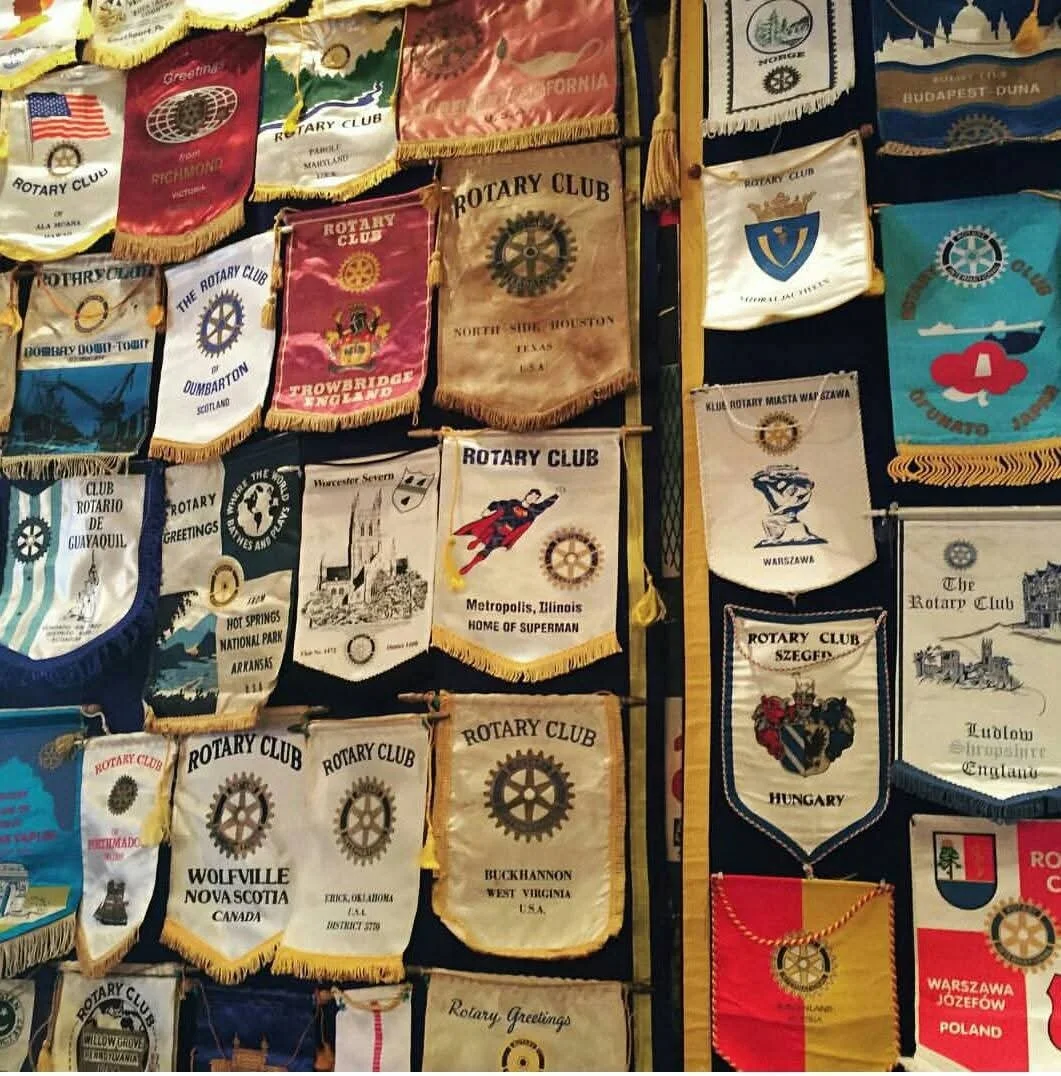
For more than a century, Rotary clubs around the world have exchanged these small, colourful, and often beautifully crafted banners as symbols of fellowship, identity, and global connection.

These banners, often proudly displayed in meeting rooms or kept as treasured mementos, represent a long-standing Rotary tradition rooted in friendship and international goodwill. But as Rotary continues to modernise, digitalise, and adapt to new generations of members, one question quietly emerges: Is the club banner still relevant, or has it become just another Rotary relic destined for the archive box or dare I say it the rubbish bin?

A Brief History of Rotary Banners

The custom of exchanging club banners dates back to the early 20th century. As international travel became more accessible, Rotarians visiting clubs abroad sought meaningful ways to commemorate these encounters. A banner bearing a club’s name, colours, motto, and local symbolism became the perfect token.

By the 1950s and 1960s, banner exchanges were pretty widespread. District Governors returned from club visits with suitcases full of banners! (Thankfully i’ve only been given 3 banners in my current year as DG)

Meeting rooms hung them proudly along the wall, forming a colourful tapestry of Rotary’s global footprint. Banners were not simply decorations, they were storytelling tools. Each one reflected the character, culture, and spirit of the club that created it and they were, or to some degree are tangible reminders that Rotary extended far beyond one town, district, or country. For many clubs, designing a banner was an act of pride a chance to showcase local history, industry, or iconic landmarks and for visiting Rotarians, presenting their club’s banner was both a gesture of respect and a reminder of the shared values that bind us.

But Are Banners Still Relevant Today?

Fast forward to today’s Rotary. The world has changed. Communication is instant and digital. Some members are younger, busier, and less inclined toward collecting memorabilia. Rotary itself encourages innovation and flexibility. The question becomes unavoidable:

Are club banners a meaningful tradition that strengthens Rotary identity, or have they become nostalgic novelties, the Rotary equivalent of collecting a collectable that doesn't spark joy anymore?

On one hand, many clubs no longer display banners regularly. Some have entire storerooms filled with dusty collections from decades past. Budget-conscious clubs question the cost of printing them. Environmentally conscious members question the need for more “stuff.”

On the other hand, banners remain one of the few tactile, personalised symbols of Rotary’s internationality. In an era of Zoom meetings and digital engagement, a physical object exchanged between clubs can feel refreshingly authentic. For visiting Rotarians, handing over a banner can still spark conversation, connection, and pride.

Tradition vs. Transformation

As Rotary strives toward long-term growth and relevance, traditions like the banner exchange inevitably come under review. But traditions can evolve rather than disappear. Some clubs now design minimalist or eco-friendly banners made from recycled materials. Others create digital banners, high-resolution designs shared via email or over social medis, reducing waste while maintaining the spirit of exchange.

My question isn't simply “Should we keep banners?” but rather is it a cherished emblem of fellowship, or a quaint tradition ready for retirement?

Is it a symbol of global unity, or just another trinket cluttering our cupboards?

The answer may be different for each club. But as Rotary continues balancing innovation with heritage, this small piece of fabric invites us to ask a bigger question:

What traditions really truly matter in Rotary now, and how do we honour our past without being limited by it?

Article by Evan Burrell

When Recognition Becomes Routine

There was a time when receiving a Rotary pin gave you goosebumps.

It wasn’t just another ceremony, it was a moment.

A proud nod from your peers that said, “You belong here. You’ve earned this.”

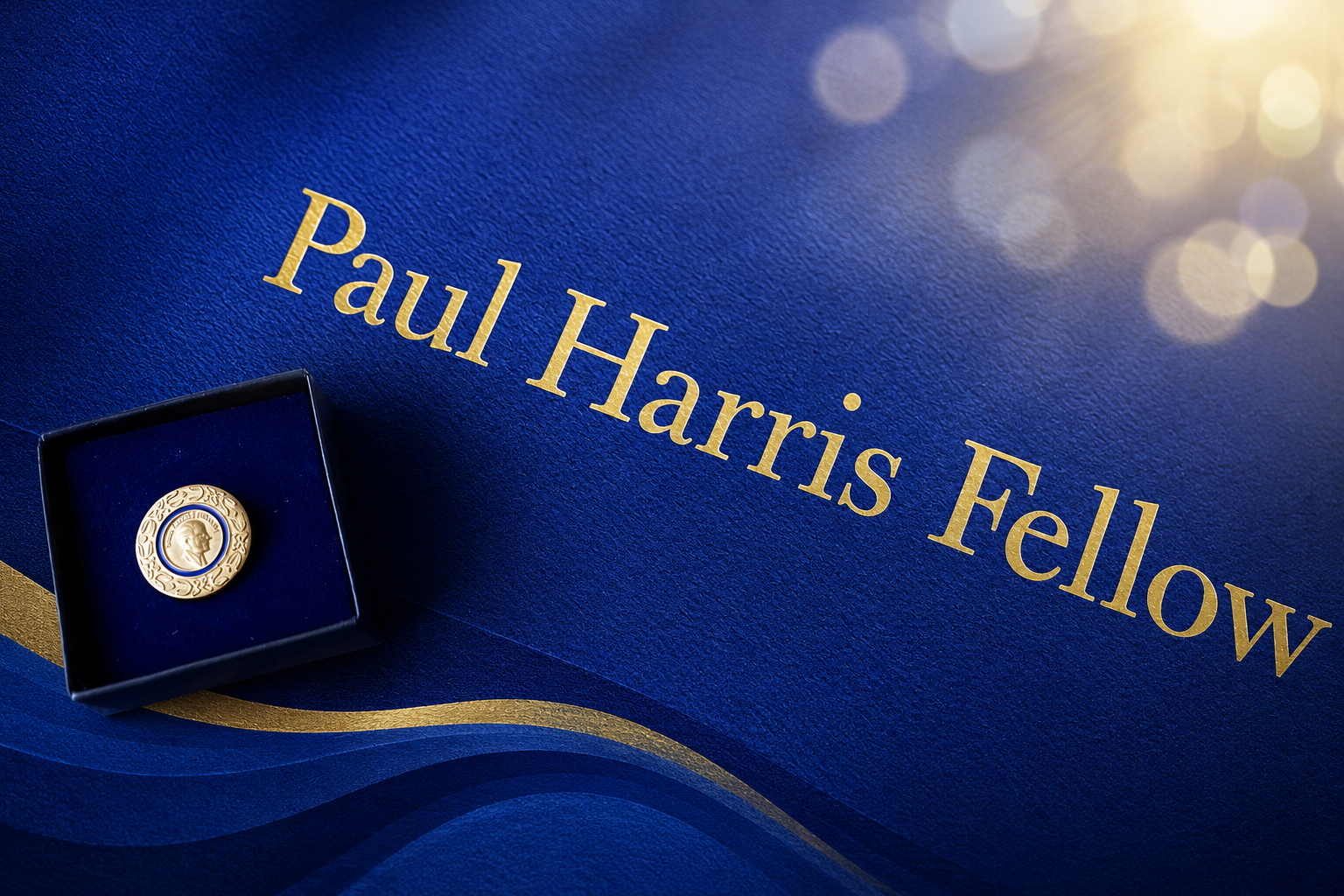
Becoming a Rotarian meant your actions had already spoken for you, your values, your service, your integrity. The same went for the Paul Harris Fellow recognition. It wasn’t a piece of paper; it was a badge of honour. A milestone that said, you’ve made a real difference.

But somewhere along the way, those moments started to feel a little…automatic.

Pins handed out without the story, certificates given without the spark. And when recognition becomes routine, it risks losing what made it powerful in the first place.

Yet the answer isn’t to stop recognising, it’s to bring back the meaning.

To make every pin, every Paul Harris Fellow, every handshake matter again.

Because recognition isn’t about the formality, it’s about the heart behind it.

It’s about celebrating those who live and breathe Rotary’s values every single day, not for applause, but for purpose.

So let’s restore that pride.

Let’s make sure every award tells a story worth sharing, every pin represents a promise kept, and every act of recognition reminds us why we joined Rotary in the first place.

Because the true strength of Rotary has never been in how many wear the pin, but in how many live by what it stands for.

Article by Evan Burrell

I'm Ready For My Close-Up!

The most popular social media platforms are YouTube and TikTok. Know why? Engaging videos!

Have you jumped on the short-video train yet? Because if not you might be missing the best opportunity your Rotary club has ever had to connect, inspire, and grow.

And no you don’t need to be Steven Spielberg or have a big Hollywood budget. You just need a phone, a story, and a little bit of Rotary heart.

These days, creating engaging short videos for social media is so easy, no film crew, no expensive gear, no perfectly memorised script. You don’t even need to be totally confident on camera. You just need to tell a story.

When you look straight into that smartphone lens and speak like you’re chatting with a friend across the table, you build real connection the kind that turns viewers into followers and followers into future members.

Try this:

Share why you joined Rotary, be authentic, be real.

Show your club in action on a service project.

Interview your guest speaker right after their talk and capture their energy while it’s fresh.

Keep it short, 30 to 90 seconds is perfect and don’t worry about perfection you're not filming Citizen Kane!. Sometimes your first take is your best take.

Not sure what to post? Borrow inspiration! There’s a treasure trove of Rotary videos on YouTube or on my Changemaker Facebook page that you can share or remix to spotlight what Rotary does best, making a difference!.

And don’t forget the golden rule: Always include a call to action.

“Find out more about joining us.”

“Support our cause/event/fundraiser etc.”

“Follow our page for more good news.”

Video is one of the most powerful storytelling tools we have and it’s made for the People of Action.

So grab your phone, hit record, and start sharing the magic of Rotary in your own authentic way.

Who knows… your next clip might just go viral. Or at least win you a few standing ovations at the next club meeting.

Article by Evan Burrell

Chain Reaction: The Rotary Bling Debate

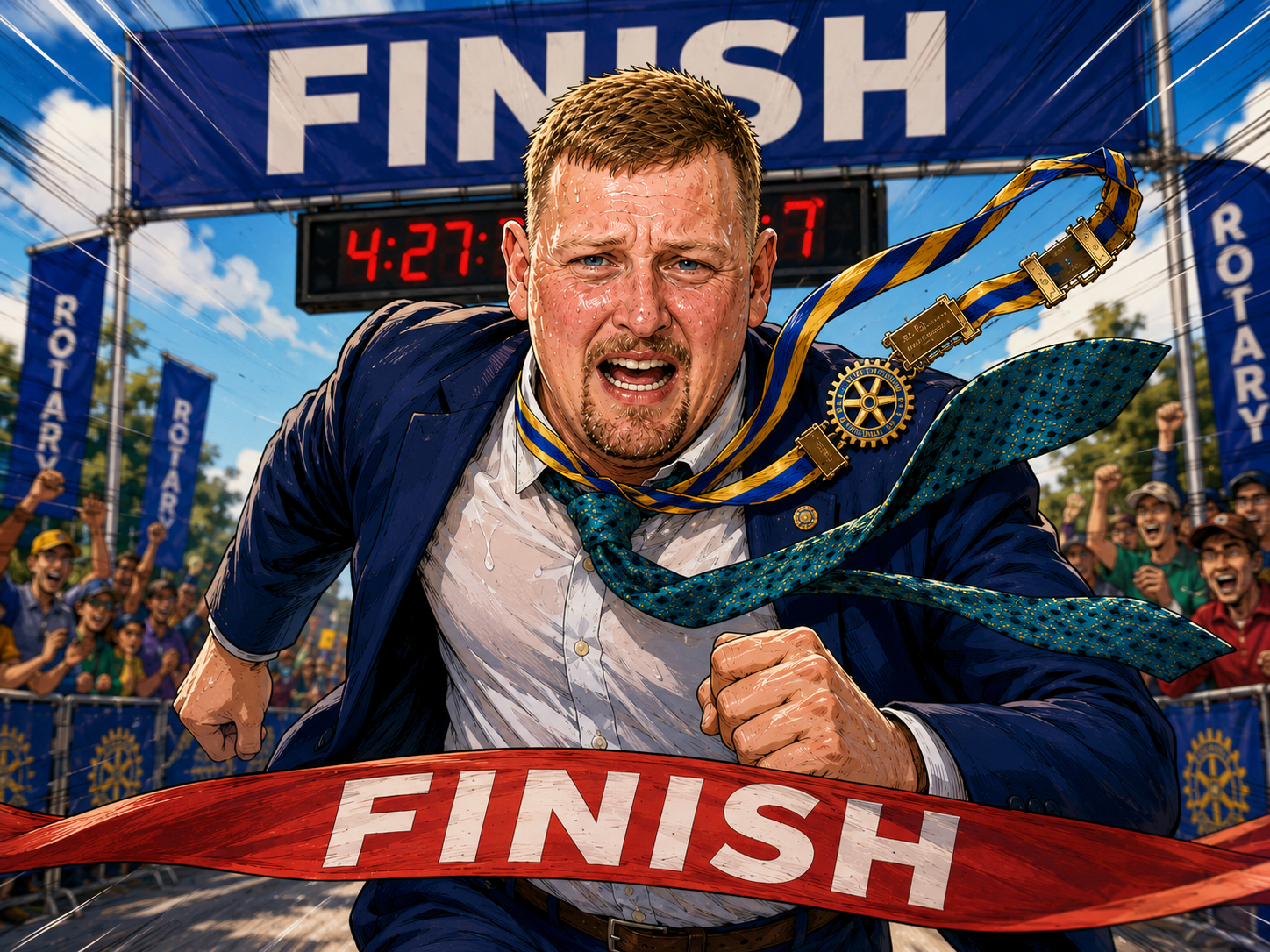
If you’ve been around Rotary long enough, you’ve probably seen it, that heavy gold chain draped ceremoniously around the neck of a Club President or District Governor, complete with a medallion that screams, “This person is Important.”

Known as the “Chain of Office,” this ornate accessory is one of Rotary’s more visible traditions. Presidents don it at changeovers, District Governors wear it at conferences, and occasionally someone forgets they have it on and tries to go through airport security with it.

But what is it really about?

The Chain Gang

The tradition of a ceremonial chain isn’t unique to Rotary, it harks back centuries to royalty, nobility, and civic leaders in the UK. Lord Mayors still wear elaborate chains during official duties, and the Rotary version is a respectful nod to that heritage. It’s a symbol of office, responsibility, and continuity.

But here’s the thing: when we, in our volunteer-run, service-before-self, “we make the world better with barbecues” organisation, break out the bling, are we still honouring tradition? Or just looking a little…… extra?

Hip-Hop Mayor Vibes?

Let’s be honest, to the uninitiated, a Rotary Chain of Office can look a lot like rapper bling. We’re just one gold tooth away from DJ Rotary spinning community service tracks. And when that medallion swings in the light, it does shimmer with a kind of “respect my authority” energy.

So is it elitist? Outdated? Silly?

Depends who you ask.

Commonwealth Quirk or Global Statement?

In many Commonwealth countries — Australia, the UK, New Zealand, Canada — the Chain of Office is fairly common. It’s steeped in local government traditions and carries a sense of formal respect. In other parts of the world, though, it can raise a few eyebrows.

Some Rotarians in Europe and the US, for example, might see the chain and think, “Is that for a coronation or a karaoke night?” Others might never have seen one at all.

Is It Time to Retire the Chain?

That’s the question. Some say yes, that it’s too hierarchical, that it makes Rotary look stuffy, or worse, like a private club from another era. Others see it as a fun and respectful way to mark leadership transitions.

There’s definitely a generational shift happening. Some younger clubs are forgoing the chain altogether. Others are giving it a modern twist, think sustainable materials, minimalist designs, or passing it around during meetings for a laugh.

So... Do You Wear the Bling?

Let’s open it up. Does your club President wear the chain with pride? Do you dust it off once a year, or is it permanently on display like an ancient relic? Is it time to update the tradition, or just embrace it for what it is: a quirky, shiny part of Rotary’s colourful history?

I’d love to hear from you, Are you team “Keep the Chain” or team “Leave it in the Museum”? Or maybe you’ve got a photo of your President looking like the Mayor of Rotaryville? Share it and I promise not to photoshop it.

As for me, if I wear it? Well I wear the chain in my role as District Governor when the need calls for it!

Article by Evan Burrell

From A Fresh-Faced Rotaractor to District Governor (Wait… What?!)

25 years ago, I was an 18-year-old kid walking into my first Rotaract meeting, probably just excited about the free food and the chance to meet a girl. If you had told me back then that one day I’d be heading to Orlando, Florida, to train as a Rotary District Governor, I probably would have laughed, choked on my snacks, and asked, “Are you sure you’ve got the right guy?”

Yet here I am, packing my bags for the Rotary International Assembly, where I’ll be learning how to take on this incredible leadership role. It’s both exciting and a little surreal.

Rotary has taken me on some amazing adventures over the years—from service projects in India to cooking snags on the BBQ outside a Bunnings to keynote speaking in the USA, even fulfilling my cowboy dreams of riding a horse with a six shooter and a ten-gallon hat on a Rotarians ranch in Southern Arizona —and now, it’s leading me into a whole new challenge.

I never expected this journey, but I wouldn’t change it for the world. Thank you to everyone who has been part of my Rotary story so far. I promise to give this role my all (and try not to break anything important along the way)……😉

Follow along on my adventure:

🌐 www.evanburrell.com

www.facebook.com/changemakerevanburrell)

#RotaryInternationalAssembly #DGInTraining #RotaryJourney #ServiceAboveSelf #WhatHaveIGottenMyselfInto